Materi Bahasa Inggris SMA
Narrative Text
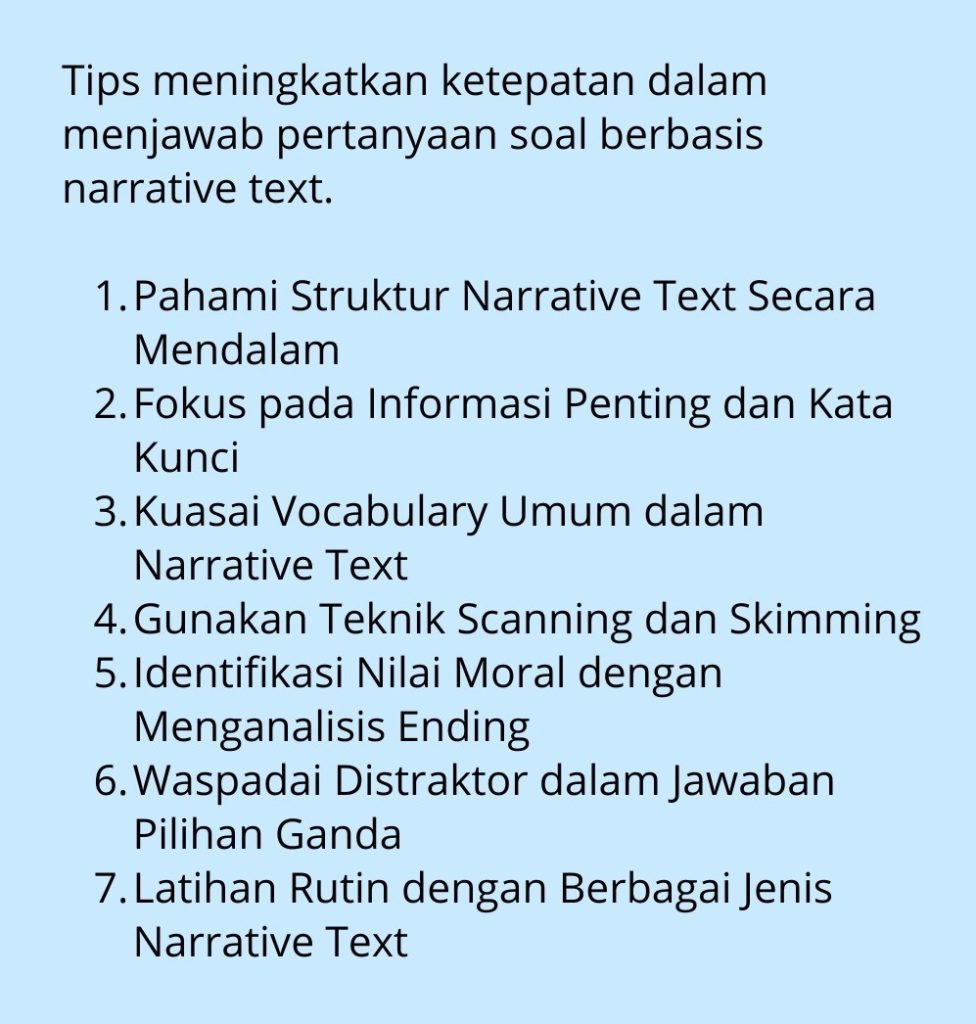
Narrative Text adalah teks yang berfungsi untuk menceritakan suatu kejadian atau rangkaian peristiwa secara kronologis dengan tujuan menghibur pembaca atau pendengar. Selain fungsi utama sebagai sarana hiburan, narrative text juga kerap menyampaikan pesan moral atau amanat yang dapat dipelajari. Cerita dalam narrative text umumnya berisi konflik yang dialami tokoh dan bagaimana konflik tersebut diselesaikan sehingga membentuk struktur alur yang jelas.
Beberapa unsur utama pembangun narrative text, antara lain:
- Social Function (Tujuan Sosial)
- Generic Structure (Struktur Teks)
- Language Features (Ciri Kebahasaan)
Contoh 1:
Narrative Text: The Boy Who Cried Wolf (Anak Gembala yang Berbohong)
Identifikasi 1:
Orientation (Orientasi): Dahulu kala, ada seorang anak gembala yang bosan menjaga domba-dombanya di dekat hutan.
Complication (Komplikasi/Masalah): Suatu hari, ia merasa bosan dan memutuskan untuk berteriak “Serigala! Serigala!” untuk mengerjai warga desa.
Resolution (Resolusi): Warga desa datang menyelamatkan, namun menemukan itu hanya kebohongan. Hal ini terjadi berulang kali hingga akhirnya saat serigala benar-benar datang, tidak ada yang percaya lagi ketika ia berteriak minta tolong.
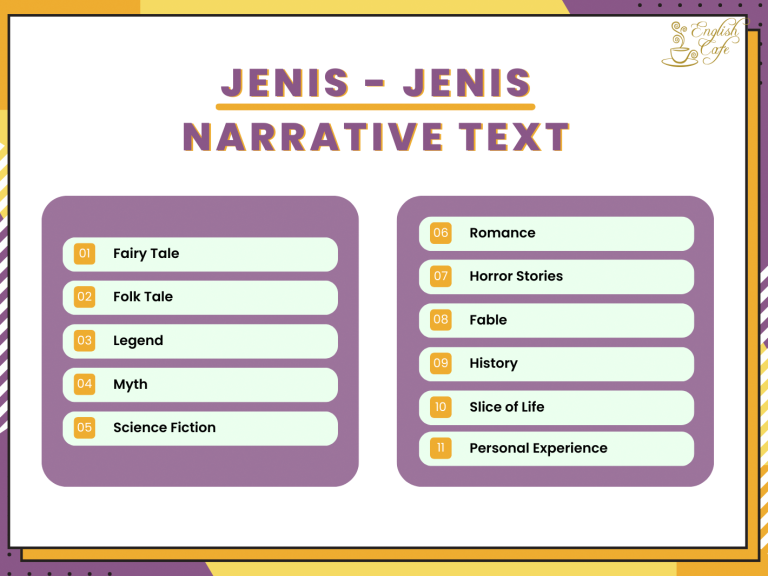
Berikut merupakan jenis-jenis dari Narrative Text:
Contoh 2:
The Lion and the Mouse (Singa dan Tikus)
One day, a lion was asleep in his den. A little mouse was playing nearby and accidentally ran over the lion’s nose. The lion woke up and was very angry. He caught the mouse and was about to kill it. “Please, King of the Beasts,” begged the mouse. “Let me go, and I will surely repay your kindness someday.”
The lion laughed at the idea of a tiny mouse helping him, but he was amused by the mouse’s plea and let him go.
A few days later, the lion was walking in the forest when he got caught in a hunter’s net. He roared loudly, but the net was too strong.
The little mouse heard the roar and ran to the spot. Seeing the lion in trouble, the mouse began to gnaw at the ropes with his sharp teeth. Soon, the lion was free. “You laughed at me once,” said the mouse, “but now you see that even a small mouse can help a great lion.”
Identifikasi 2:
Orientation (Orientasi): Seekor singa sedang tidur di hutan. Seekor tikus kecil yang ketakutan tanpa sengaja berlari di atas hidungnya.
Complication (Komplikasi/Masalah): Singa itu bangun dan menangkap tikus itu, berencana memakannya. Tikus kecil itu memohon untuk dilepaskan dan berjanji suatu saat akan membalas kebaikannya.
Resolution (Resolusi): Singa itu geli dan melepaskan tikus tersebut. Tak lama kemudian, singa terperangkap jaring. Tikus yang teringat janji datang dan menggerogoti jaring tersebut hingga singa bisa melarikan diri.
Dari teks bacaan diatas berjudul “The Mouse and the Lion” Jawablah pilihan ganda dibawah ini.
1. What is the main purpose of this text?
A. To inform the reader about the daily life of a lion and a mouse.
B. To describe the physical appearance of a lion.
C. To entertain the reader with a story and convey a moral lesson.
D. To explain how to trap a lion in a net.
2. Why was the lion angry at the beginning of the story?
A. The mouse ate his food.
B. The mouse made too much noise.
C. The mouse ran over his nose while he was sleeping.
D. The mouse was trying to steal his crown.
3. What does the word “gnaw” in the fourth paragraph mean?
A. To pull something hard.
B. To cut or bite something repeatedly.
C. To tie something tightly.
D. To shout loudly.
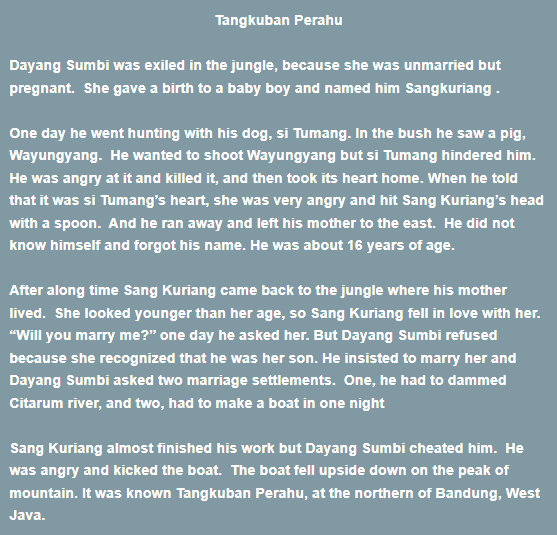
1. Where is the legend from? It is from …
A. East Java
B. West Java
C. Central Java
D. North Java
2. Who is the main character of the story above?
A. Si Tumang
B. Sangkuriang
C. Dayang Sumbi
D. Sangkuriang’s mother
3. Why was Dayang Sumbi exiled in the jungle? Because she …
A. Was married and pregnant
B. Was unmarried and not pregnant
C. Was unmarried and pregnant
D. Followed her husband